AML/CTF


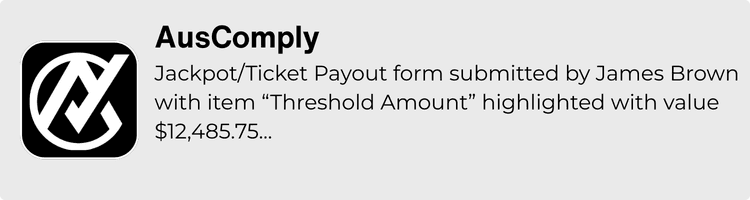
Built to support AML/CTF compliance & evolving regulatory expectations for gaming venues.
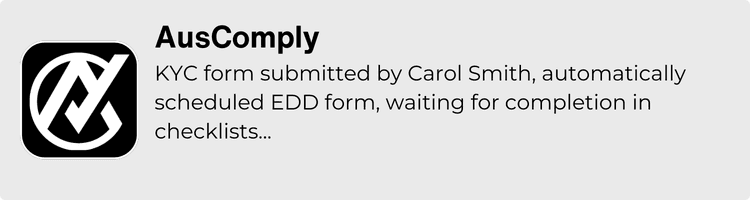
With guided workflows that automatically trigger required checks, forms + actions based on risk & responses.



Australia is undergoing the largest overhaul of its anti-money laundering and counter-terrorism financing framework in nearly two decades. The reforms are being introduced through the Anti‑Money Laundering and Counter‑Terrorism Financing Amendment Act 2024, overseen by AUSTRAC, Australia’s financial intelligence agency.
The goal of the reforms is to strengthen Australia’s ability to detect and prevent financial crime, particularly in sectors that handle significant amounts of cash such as pubs, clubs and gaming venues. Regulators have identified gambling venues as a key risk area for money laundering activity, which has prompted stronger compliance expectations for venue operators and their staff.
These reforms will significantly change how venues monitor gambling activity, identify customers, and document suspicious behaviour. Businesses that fail to meet the new standards may face regulatory enforcement, penalties, and reputational damage.
AML/CTF Reforms Are Changing How Venues Operate
When the Changes Are Coming.
The reforms are being introduced in stages throughout 2026.
31 March 2026 – New AML/CTF program obligations begin for existing regulated entities.
1 July 2026 – Additional regulatory obligations commence and new industries begin entering the regime.
From this point forward, venues must move away from a “check-box compliance” approach and instead adopt a risk-based AML/CTF framework that actively identifies and manages financial crime risks.
The new framework requires venues to actively identify and manage risks related to money laundering and terrorism financing. Rather than simply maintaining a written compliance program, businesses must demonstrate that their procedures genuinely reduce risk.
AML/CTF Reforms Are Changing How Venues Operate
Australia is undergoing the largest overhaul of its anti-money laundering and counter-terrorism financing framework in nearly two decades, introduced through the Anti-Money Laundering and Counter-Terrorism Financing Amendment Act 2024 and overseen by AUSTRAC.
Unlike a generic checklist, the reforms require every venue to have an AML/CTF program tailored to its own risk profile, its customer base, location, and gaming operations. A program built for one venue won't satisfy AUSTRAC for another, and regulators have identified gambling venues as a key risk area for money laundering.
With AUSTRAC's expanded powers, regulators are actively looking for venues running generic, outdated, or poorly documented programs, and are prepared to issue remedial directions where one falls short. Venues that can't demonstrate a program genuinely tailored to their operation face real exposure to enforcement, penalties, and reputational damage.
What will be expected of venues?
What will be expected of venues?
Risk Assessments
Venues must conduct and maintain documented assessments of the money-laundering and terrorism-financing risks they face based on their services, customers and transaction types.
Customer Identification and Due Diligence
Gaming venues will need to identify customers once gambling transactions reach certain thresholds. The identification threshold for gambling services is expected to reduce from $10,000 to $5,000, meaning venues must know who their customers are at a much earlier point in their play.
Transaction Monitoring and Suspicious Activity Reporting
Venues will need processes to monitor patron behaviour and escalate suspicious activity internally before reporting it to regulators. This includes documenting why behaviour was considered acceptable or suspicious and ensuring staff know when to escalate issues.
Governance and Staff Responsibility
Senior management and venue leadership will have increased accountability for AML/CTF compliance. Venues must maintain policies, procedures and training that ensure staff can recognise and respond to financial crime risks.
Seamlessly integrated with AusComply's Digital Incident Register, AML/CTF sits inside the same platform, one login, no separate systems to manage.
Built directly into the tools your team already uses on the floor, it's there exactly when you need it most: fast, mobile, and ready to go without breaking your workflow.
The AusComply system guides staff through the entire compliance process, from patron and venue risk assessments, KYC and identification checks, enhanced customer due diligence, PEP checks, EFT records, and suspicious matter reporting, all the way through to management and board reporting.
The goal isnt to make compliance harder, its to make it part of everyday venue operations. Staff complete the right process at the right time, managers can oversee compliance in real time, and the venue has clear digital audit trails supporting it's AML/CTF obligations.
Ultimately, AusComply is giving venues a practical system that helps reduce administrative workload while building a much stronger compliance framework as the new AML/CTF obligations come into effect.
AML/CTF Reforms Are Changing How Venues Operate
When the Changes Are Coming.
Built to support AML/CTF compliance & evolving regulatory expectations for gaming venues.
With guided workflows that automatically trigger required checks, forms + actions based on risk & responses.
The reforms are being introduced in stages throughout 2026.
31 March 2026 – New AML/CTF program obligations begin for existing regulated entities.
1 July 2026 – Additional regulatory obligations commence and new industries begin entering the regime.
From this point forward, venues must move away from a “check-box compliance” approach and instead adopt a risk-based AML/CTF framework that actively identifies and manages financial crime risks.
The new framework requires venues to actively identify and manage risks related to money laundering and terrorism financing. Rather than simply maintaining a written compliance program, businesses must demonstrate that their procedures genuinely reduce risk.
Australia is undergoing the largest overhaul of its anti-money laundering and counter-terrorism financing framework in nearly two decades. The reforms are being introduced through the Anti‑Money Laundering and Counter‑Terrorism Financing Amendment Act 2024, overseen by AUSTRAC, Australia’s financial intelligence agency.
The goal of the reforms is to strengthen Australia’s ability to detect and prevent financial crime, particularly in sectors that handle significant amounts of cash such as pubs, clubs and gaming venues. Regulators have identified gambling venues as a key risk area for money laundering activity, which has prompted stronger compliance expectations for venue operators and their staff.
These reforms will significantly change how venues monitor gambling activity, identify customers, and document suspicious behaviour. Businesses that fail to meet the new standards may face regulatory enforcement, penalties, and reputational damage.
What Will Be Expected of Venues.
Risk Assessments
Venues must conduct and maintain documented assessments of the money-laundering and terrorism-financing risks they face based on their services, customers and transaction types.
Customer Identification and Due Diligence
Gaming venues will need to identify customers once gambling transactions reach certain thresholds. The identification threshold for gambling services is expected to reduce from $10,000 to $5,000, meaning venues must know who their customers are at a much earlier point in their play.
Transaction Monitoring and Suspicious Activity Reporting
Venues will need processes to monitor patron behaviour and escalate suspicious activity internally before reporting it to regulators. This includes documenting why behaviour was considered acceptable or suspicious and ensuring staff know when to escalate issues.
Governance and Staff Responsibility
Senior management and venue leadership will have increased accountability for AML/CTF compliance. Venues must maintain policies, procedures and training that ensure staff can recognise and respond to financial crime risks.
What is AusComply committed to providing?
Stage 1 - April 1st 2026:
Venue, Staff, Patron Risk Assessments.
AML/CTF Forms; KYC, SMR, PEP, ECDD + Check/EFT Payout & Jackpot Forms.
Pre-population coming mid-April.
Stage 2 - July 1st 2026:
Automated links and prompts from one form to the next.
Integrated online checks for document verification (KYC, PEP, ECDD)
Stage 3 - September 1st 2026:
Monthly, Quarterly, Yearly board/upper management reports.
Advanced dashboard analytics.
Online submissions to AUSTRAC (once made available); SMR reports/yearly venue reports.
Advanced optional system-wide AI assistant integration

AML/CTF
AusComply's committment.
AusComply's committment.
Stage 1 - Available NOW
Venue, Staff, Patron Risk Assessments, with detail risk ratings.
AML/CTF Forms; KYC, SMR, PEP, ECDD + Check/EFT Payout & Jackpot Forms.
Pre-population on forms..
Stage 2 - Available NOW
Automated links and prompts from one form to the next.
Stage 3 - Coming before October 1st 2026:
Integrated online checks for document verification (KYC, PEP, ECDD)
Monthly, Quarterly, Yearly board/upper management reports.
Advanced dashboard analytics.
Online submissions to AUSTRAC (once made available); SMR reports/yearly venue reports.
Advanced optional system-wide AI assistant integration